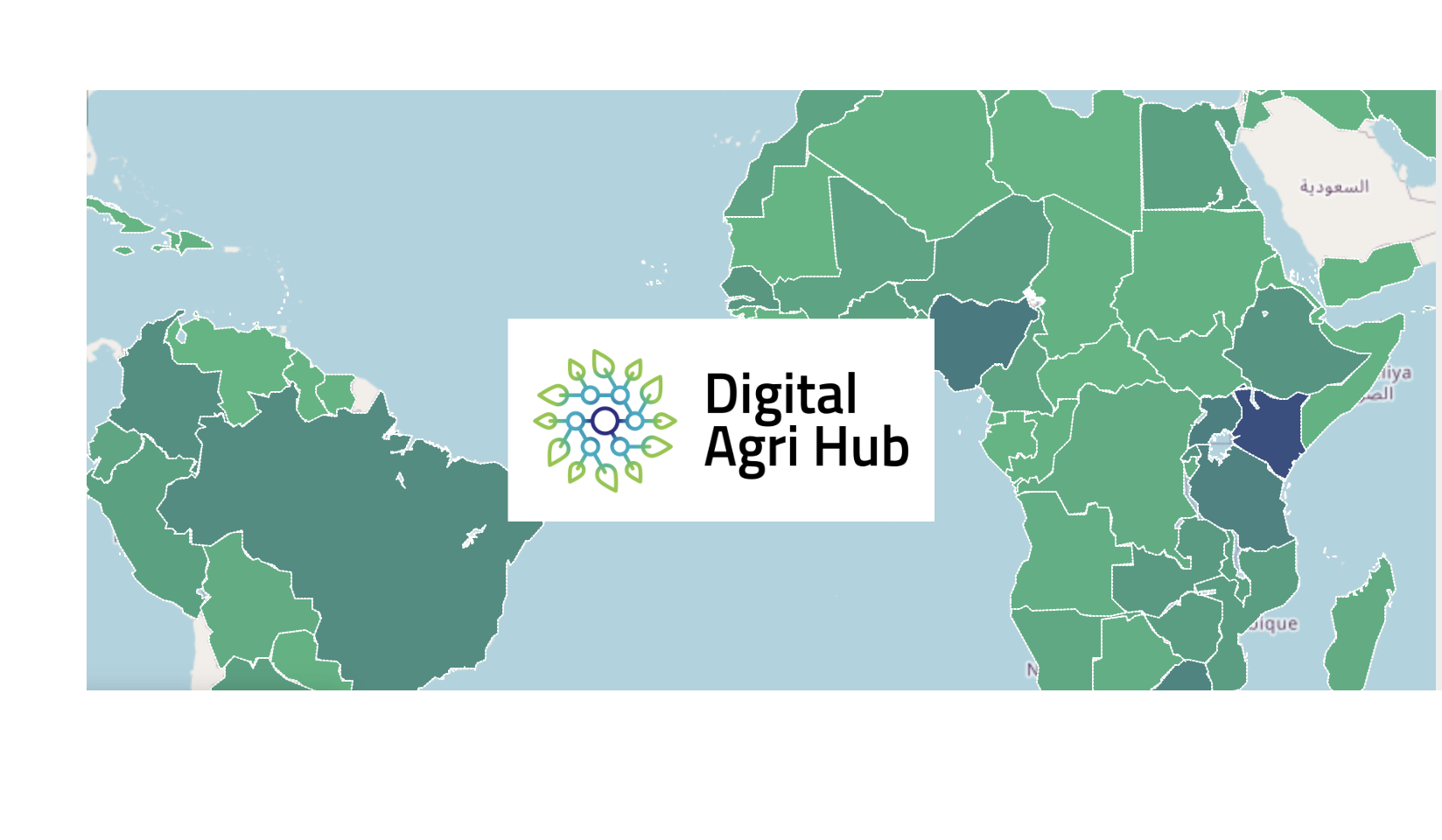
LandPKS Soil ID mobile app is now listed in the Digital Agri Hub dashboard, a curated global resource tracking over 1,400 digital agriculture solutions deployed across 134 low- and middle-income countries. The listing reflects LandPKS Soil ID’s role as a field-ready tool for soil identification, built for the full range of land stewards: soil scientists, agricultural extension agents, government data collectors, smallholder farmers, and ranchers working across diverse landscapes and resource contexts.
We were introduced to Digital Agri Hub with an invitation to join their forum, D4Ag, in a global conversation about whether digital agriculture solutions can scale among smallholder farmers without human agents. The discussion was a deep dive on familiar challenges such as farmer hesitation to adopt new technology, questions about whether digital tools are addressing real needs in specific local contexts, barriers posed by technical literacy and language, and the simple reality that farmers are busy farming. The LandPKS team contributed to one of the group’s main conclusions: community-based agents play a critical role in tech providing value to many farmers.
Soil knowledge is foundational to sustainable agriculture practices, but accessing it often requires lab equipment and specialized training. Although introducing farmers to LandPKS Soil ID typically benefits from the participation of a trained field agent, the tool is designed to significantly lower the barrier and enable soil identification in the field with minimal equipment or prior experience. The app is free, and is built to function in low-connectivity environments around the globe.
Expand your organization’s impact with LandPKS Soil ID
We joined Digital Agri Hub to connect with the broader agriculture technology ecosystem and to do more together. We invite organizations working in agricultural advisory services, land use planning and management, food security, and climate resilience to reach out to us! There are many ways to collaborate: promote the app within your networks, incorporate the app into your programs, support translation into additional languages, contribute to feature scoping and roadmap input, and co-develop training materials and funding strategies to keep the tool free and maintained for the communities that need it most.