Courtney Tiberio | Oct. 2, 2025
In Kamianets-Podilskyi, Ukraine, Professor Yuriy Dmytruk faces a challenge that would be daunting even in peacetime: how do you assess and heal soils when research infrastructure has been damaged, scientific staff are serving in the military, and vast areas of farmland remain inaccessible for surveys? For a soils science professor at Podilla State University and member of the Soil Protection Institute of Ukraine, this isn’t just an academic question—it’s about the future of his country’s agricultural foundation.
Ukraine’s Soil Legacy Under Pressure
Ukraine’s agricultural significance—producing 3.4% of the world’s barley, wheat, and maize—stems from its rare black soils. Classified scientifically as Chernozems, these mineral soils are rich in organic matter and extraordinarily fertile, making them crucial for both climate change mitigation and high crop productivity. These remarkable soils cover only 7% of the world’s ice-free land surface, making Ukraine’s agricultural lands globally precious.

Even before Russia’s invasion in 2022, Ukraine’s soils faced mounting pressures from decades of intensive farming practices. 40% of the country experienced widespread erosion, while fertilizers and pesticides increased soil acidity and pollution. The ongoing war has significantly compounded these existing challenges. Approximately 20% of Ukraine’s territory is occupied by the Russian Federation’s army, and a significant part of the agricultural land (according to various sources, up to 137,000 square kilometers) remains mined, limiting cultivation and creating risk for farmers.
The soil in the de-occupied territories urgently needs assessment, but funding this work is inhibited by Ukraine’s war-torn economy. Constant shelling from drones, KABs, and rockets often makes it impossible to work the land and harvest crops. In the Kherson region alone, for example, there are 2,700 drone attacks per week.
The war’s impact on Ukraine’s soil research infrastructure has been profound. Institute branches in Donetsk and Luhansk regions and in Crimea have stopped research entirely. The soil laboratory in Kherson was destroyed and has not yet been restored. Laboratories in Kharkiv, Sumy, and Chernihiv suffered severe damage. Dozens of Soil Protection Institute staff members now serve in Ukraine’s Armed Forces.
Professor Dmytruk has published a number of white papers on the topic, including the 2024 Soils in war and peace, whose abstract includes:
Mimicking personalised medicine and the precision-agriculture principle, farm by soil type, we can now set about healing by soil type – drawing on the particular resilience of particular soils and make allowance for their weaknesses too. For instance, chernozem have extraordinary resilience and self-healing capacity; a calcareous clay can fix radionuclides but peat soils have no such capacity.
In 2024 he and Svitlana Romanova, deputy general director for scientific activities of the Soil Protection Institute of Ukraine, published Soil monitoring infrastructure in response to war in which they detail the impacts of the war on Ukrainian soils (compaction, erosion, biodiversity loss, contamination, and physical destruction of soils) and the infrastructure needed to enable remediation and monitoring.
Dmytruk also made the 2024 presentation “The State of Soil in Ukraine: Features, degradation and impact of war” in which he states:
During the active hostilities, more than 200,000 hectares of land were contaminated and damaged, and about 20% of Ukraine’s best agricultural land affected by the military actions is not available for surveys, even in regions that have already been liberated from occupation.

A Professor’s Search for Solutions
This research made him acutely aware of what Ukraine had lost—and what it needed to rebuild. Faced with damaged infrastructure and dispersed teams, he began searching for digital tools that could help maintain soil research and education. In April 2025, that search led him to LandPKS Soil ID.
“As a professor, LandPKS reduces the amount of time needed for field soil identification without requiring additional resources,” Dmytruk explained. “It also allows me to better monitor my students’ activities at a distance.”
From Discovery to Partnership
At the time Dmytruk found the app, LandPKS Soil ID didn’t provide soil identification outside the US, but he immediately recognized its educational potential. He wrote a Ukrainian-language user manual to help his students and colleagues use the tool, demonstrating the kind of resourcefulness that has characterized Ukraine’s academic community throughout the crisis.
When the LandPKS team learned about Dmytruk’s manual and his needs, a natural partnership emerged. Having recently released a Spanish translation, we asked him to partner with us to translate the app into Ukrainian—a tremendous effort that he graciously took on. The resulting Ukrainian version launched in September 2025.
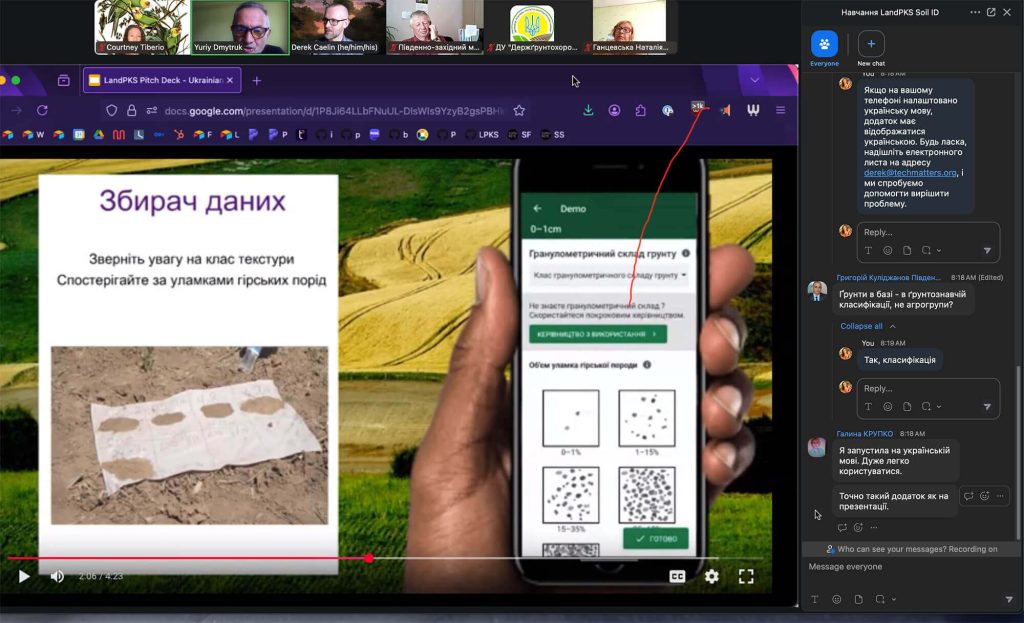
The collaboration quickly expanded beyond translation. Dmytruk invited Terraso’s product manager Derek Caelin to present LandPKS Soil ID virtually to the Soil Protection Institute of Ukraine as part of a training session on field diagnostics for soil classification. More than 50 specialists from 23 Ukrainian regions (oblasts) participated, including those under daily military threat.
Practical Impact in Challenging Times
For Ukraine’s soil specialists, LandPKS Soil ID aims to address a critical practical need. These professionals are responsible for agrochemical certification, issuing agrochemical passports to landowners that describe soil characteristics including humus content, nutrients, acidity, heavy metal content, and soil type.
“While soil status indicators are measured in a laboratory and are provided by relevant standards, determining the type (genus, kind) of soil has always been problematic, and specialists, especially those with little experience, are not always able to identify the specific type of soil. Therefore, I hope that incorporating LandPKS capabilities into their activities will help solve this problem,” Dmytruk noted.
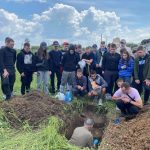
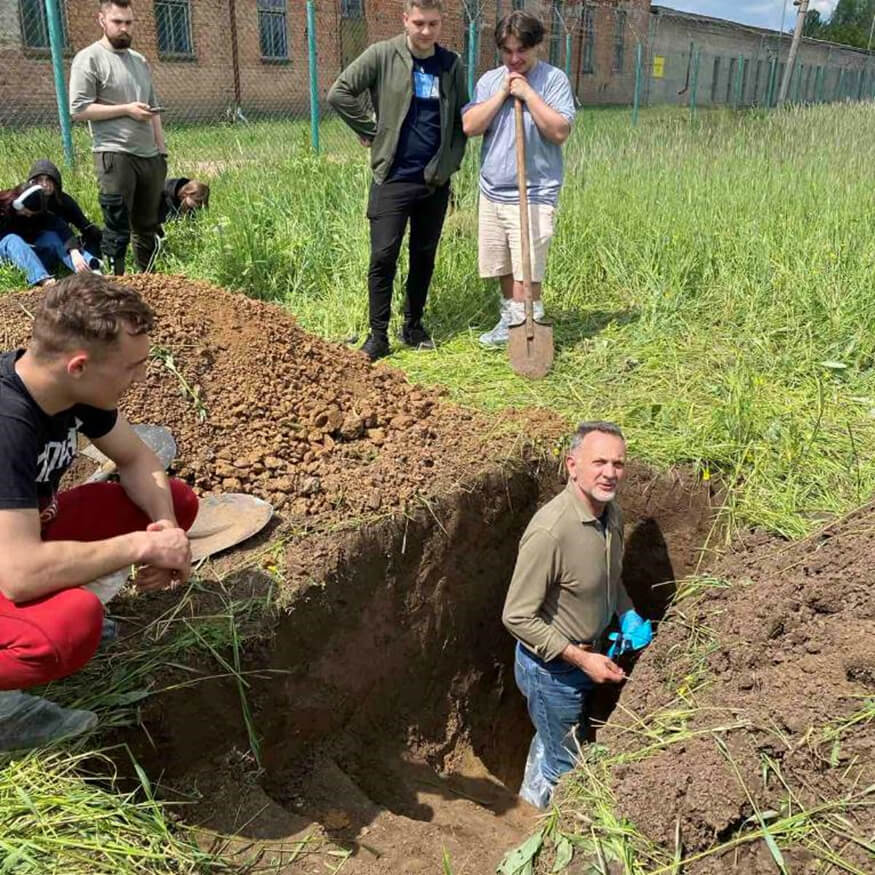
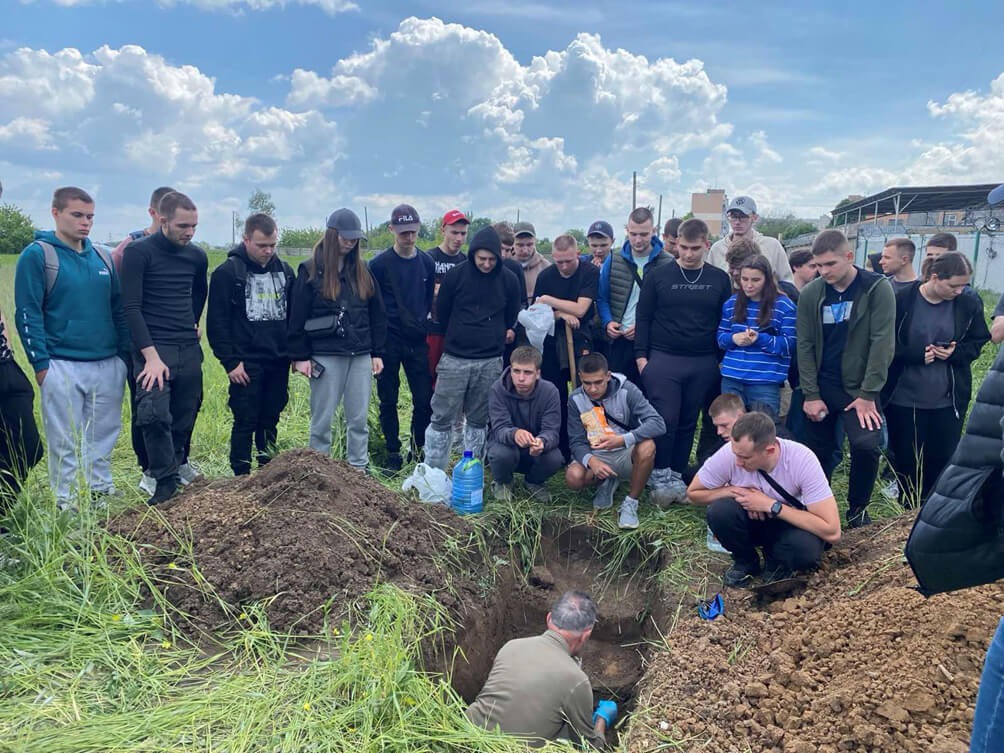
This fall semester, Dmytruk is training students at both Podilla State University and Poltava State Agrarian University in using LandPKS Soil ID. For soil identification exams, he created projects within the app, configured requirements, and assigned these projects to students to track their progress and see their observations and final results in real time. He even established a Viber group where students, colleagues, and LandPKS team members discuss the app and share questions.

Looking Forward: Building Resilience
Professor. Dmytruk has identified additional features that would enhance the app’s value for Ukrainian soil assessment: nutrients, pH, erosion, compaction, salinity, and chemical contamination data. These additions would increase possibilities for soil type verification and reduce dependence on costly, time-intensive laboratory analyses.
“An important addition is the improvement of the LandPKS application’s ability to determine the type and degree of soil degradation,” he explained, noting that the EU has transitioned from soil quality assessment to soil health assessment—a shift Ukraine is also embracing.
While it’s too early to measure LandPKS Soil ID’s full impact in Ukraine, the partnership represents something profound: international collaboration enabling local resilience. Just as Ukraine’s Chernozem soils possess extraordinary self-healing capacity, the country’s scientific community continues to find ways to adapt, recover, and rebuild—with support from partners who understand that healthy soils are essential for a sustainable future.
Supporting Ukraine’s Agricultural Future
As the LandPKS project seeks funding and partnerships to advance its global impact, Ukraine’s story serves as a powerful reminder of the tool’s importance and timeliness. In Professor Dmytruk’s words: “I hope that LandPKS will contribute to the popularization of knowledge and interest in soils even among citizens and, especially, young people. The ease of use of the LandPKS application contributes to this.”
The collaboration between Ukrainian soil scientists and the LandPKS team demonstrates how digital tools can transcend borders to support agricultural resilience in the world’s most challenging circumstances. For Ukraine’s recovery and for global food security, that support has never been more crucial.
If you’re interested in supporting the LandPKS project through funding or codesign partnership opportunities, please contact the team to discuss how you can contribute to this vital work.